Click on a date below to expand the full advanced ESL lesson for that day.
A new analysis has brought to light the substantial financial repercussions of Iranian strikes on military installations frequently utilized by American forces. These engagements, primarily occurring in the week immediately following an operation launched by the United States and Israel, reportedly incurred damage estimated at a staggering $800 million. The comprehensive assessment underscores the considerable economic toll associated with geopolitical tensions and military escalations in the region. Much of this extensive damage was observed during the initial wave of retaliatory actions undertaken by Iran. This recent data provides a clearer picture of the tangible costs beyond human lives and political ramifications. Such an exorbitant figure highlights the critical infrastructure vulnerable to modern warfare. Ultimately, the incident serves as a stark reminder of the volatile nature of international relations and the significant material consequences of armed conflict.
Advanced Grammar: Nominalization
Nominalization is the process of forming a noun from another part of speech, often a verb or adjective. It's a common feature in formal, academic, and journalistic writing, used to condense information, express concepts more abstractly, and create a more authoritative tone. For instance, instead of saying 'when things are tense' or 'when things escalate', the text uses 'geopolitical tensions and military escalations'. This technique shifts the focus from the action itself to the concept, making the writing more concise and sophisticated, as seen in the phrase "substantial financial repercussions."
Click on an option to check your answer.
1. What is the primary focus of the new analysis mentioned in the news brief?
2. According to the analysis, what was the estimated financial cost of the damage?
3. When did much of the reported damage predominantly occur?
4. What does the term 'retaliatory' imply in the context of the Iranian strikes?
5. Which adjective best describes the nature of international relations, as implied by the news brief's closing statement?
6. What is 'Nominalization' as explained in the grammar section?
7. The news brief mentions 'geopolitical tensions'. What does 'geopolitical' relate to?
The escalating conflict in Iran is poised to precipitate a complex web of global economic and geopolitical ramifications, redrawing the lines between international winners and losers. As the region experiences profound instability, the ripple effects are projected to significantly disrupt vital trade routes and global energy markets, sending shockwaves through interdependent economies. Major powers such as the United States, Russia, and China find themselves in precarious positions, each with distinct vulnerabilities and potential advantages. The US, for instance, might initially face an uptick in energy costs and a renewed demand for military engagement, yet could simultaneously leverage the crisis to bolster strategic alliances and reaffirm its leadership role in security matters. Conversely, Russia, a significant energy exporter, might capitalize on increased oil prices, thereby strengthening its economic standing despite facing heightened international scrutiny. China's industrial engine, heavily reliant on stable energy supplies and unimpeded trade, stands to incur substantial economic headwinds from supply chain disruptions, though Beijing may also seek to reassert its diplomatic influence in a volatile Middle East. This precarious global landscape underscores the intricate interplay of power dynamics, resource allocation, and international relations, making the long-term outcomes for these nations profoundly uncertain.
Advanced Grammar: Nominalization
Nominalization is the process of forming a noun from another part of speech (like a verb or adjective) or turning a clause into a noun phrase. It's a common feature of academic and formal writing, allowing for the condensation of information and creation of a more objective tone. For example, instead of saying 'as the conflict escalates, it affects global markets,' one might say 'the escalation of the conflict causes disruption in global markets.' In our text, 'profound instability' uses 'instability,' a nominalization of 'unstable,' to describe the regional situation succinctly, and 'ramifications' is a nominalization of what might 'ramify' or be the 'consequences' of the conflict.
Click on an option to check your answer.
1. What is the primary focus of the news brief regarding the Iran conflict?
2. According to the text, which factor primarily drives the 'ripple effects' of the conflict?
3. How might the United States potentially 'leverage' the crisis?
4. What is a potential benefit for Russia mentioned in the brief?
5. Which of the following best describes the expected impact of the conflict on China's economy?
6. In the phrase 'precipitate a complex web of global economic and geopolitical ramifications,' what does 'precipitate' most closely mean?
7. The term 'nominalization' in the grammar focus refers to:
The geopolitical landscape is once again precipitating a significant energy conundrum for Europe, as escalating hostilities involving Iran threaten to disrupt vital global supply chains. This potential escalation underscores the continent's persistent vulnerability, heavily reliant on imported hydrocarbons to fuel its vast industrial complex and power its domestic needs. Observers are drawing sharp parallels to previous periods of profound energy-linked frustration, evoking memories of past oil shocks and, more recently, the repercussions of the conflict in Ukraine. Such disruptions invariably trigger cascading economic consequences, including inflationary pressures, decelerated industrial output, and heightened cost-of-living concerns for citizens. Furthermore, the crisis presents considerable diplomatic challenges, potentially testing the cohesion of the European Union's foreign policy and its collective resolve. The imperative to diversify energy sources and accelerate the transition to renewables gains renewed urgency amidst these geopolitical uncertainties, yet progress remains protracted. Ultimately, Europe's recurrent entanglement in energy crises highlights a systemic issue, compelling a re-evaluation of its long-term strategic energy independence.
Advanced Grammar: Participle Clauses for Consequence/Result
Participle clauses can effectively express the consequence or result of a main action, providing a more concise and sophisticated sentence structure. They often use the present participle (-ing form) and imply 'with the result that' or 'thereby causing'.
Example from text: "Ultimately, Europe's recurrent entanglement in energy crises highlights a systemic issue, compelling a re-evaluation of its long-term strategic energy independence." Here, 'compelling' describes the outcome or effect of the systemic issue, showing what it forces Europe to do.
Click on an option to check your answer.
1. What is the primary focus of the news brief?
2. Which of the following is NOT mentioned as a potential consequence of the energy crisis in Europe?
3. In the sentence, "The geopolitical landscape is once again precipitating a significant energy conundrum for Europe...", what does 'conundrum' mean?
4. What does the article suggest about Europe's fundamental energy situation?
5. When the article mentions "repercussions of the conflict in Ukraine," what does 'repercussions' refer to?
6. What solution is implicitly suggested as having "renewed urgency" for Europe?
7. In the sentence, "The geopolitical landscape is once again precipitating a significant energy conundrum for Europe...", what does 'precipitating' imply about the Iran conflict's role?
In a deeply unsettling report, residents of Tehran have conveyed to the BBC their profound predicament, describing an existence fraught with unrelenting dread. This pervasive anxiety stems from their precarious position, caught as they are between the imminent threat of US-Israeli aerial bombardment and the repressive machinery of an Iranian regime intent on consolidating its authority. The psychological toll of such a dual threat is immeasurable, manifesting as a constant undercurrent of fear within daily life. Citizens speak of a suffocating atmosphere, where dissent is ruthlessly suppressed, further exacerbating their sense of powerlessness. This internal crackdown appears designed to quash any burgeoning opposition, reinforcing the regime's control amidst external pressures. The strategic geopolitical chessboard places Iran at a critical juncture, where domestic stability is continuously undermined by the shadow of international conflict. Consequently, the populace endures a daily struggle for normalcy, overshadowed by the spectre of both governmental overreach and potential foreign military intervention.
Advanced Grammar: Nominalization
Nominalization is the process of forming a noun from a verb or adjective. It's common in academic and formal writing to condense information and create a more objective tone. For instance, 'repression' (from 'repress') and 'dread' (from 'dread' as a verb or adjective) are nominalizations used in the news brief. This allows for a more concise and formal expression compared to a more verbal phrasing like 'People are totally repressed, and air strikes make them constantly dread...'.
Click on an option to check your answer.
1. What is the primary source of the 'unrelenting dread' experienced by Tehran residents?
2. What does the term 'precarious position' imply about the residents' situation?
3. What does 'psychological toll' refer to in the context of the passage?
4. What is one consequence of the regime's suppression of dissent?
5. The phrase 'quash any burgeoning opposition' suggests the regime aims to:
6. What is meant by Iran being at a 'critical juncture'?
7. What is the 'spectre' that overshadows the populace's daily struggle?
The White House, under President Trump's directive, is reportedly seeking a postponement for a crucial bilateral meeting with Chinese President Xi Jinping, originally slated for an imminent date in China. This strategic recalibration is primarily attributed to the burgeoning complexities and escalating conflict in Iran, which has undeniably seized the paramount attention of US foreign policy apparatus. The ongoing conflagration in the Middle East, with its dire humanitarian and geopolitical ramifications, has necessitated a significant shift in diplomatic priorities. Consequently, the administration finds it an imperative to dedicate its resources and focus to de-escalating the regional tensions and safeguarding US interests in the Persian Gulf. This development underscores how rapidly evolving global crises can effectively overshadow long-standing foreign policy objectives and planned diplomatic overtures. While the US-China trade negotiations and broader strategic dialogue remain critical, the exigencies of the current Iranian situation have compelled a temporary diversion of high-level engagement. The decision to delay is thus a clear indication of a re-prioritization, demonstrating the confluence of international events dictating the pace and direction of global diplomacy.
Advanced Grammar: Nominalization
Nominalization is the process of forming a noun from a verb or adjective. It's a common feature of formal and academic writing, used to condense information, create a more objective tone, and link ideas abstractly. For example, instead of saying 'They decided to recalibrate their strategy,' one might say 'Their strategic recalibration was decided.'
Example from text: "This strategic recalibration is primarily attributed to the burgeoning complexities..." (Here, the verb 'recalibrate' has been transformed into the noun 'recalibration', making the sentence more formal and concise.)
Click on an option to check your answer.
1. Why is President Trump reportedly seeking to delay his meeting with Chinese President Xi Jinping?
2. What does the article suggest about the impact of the Iran conflict on US foreign policy?
3. What does 'paramount attention' imply in the context of the article?
4. Which of the following is an example of nominalization from the text?
5. The word 'exigencies' in the text refers to:
6. According to the lesson, what is a characteristic of nominalization in formal writing?
7. What phrase best describes the overall effect of global crises on a nation's diplomatic agenda, as presented in the article?
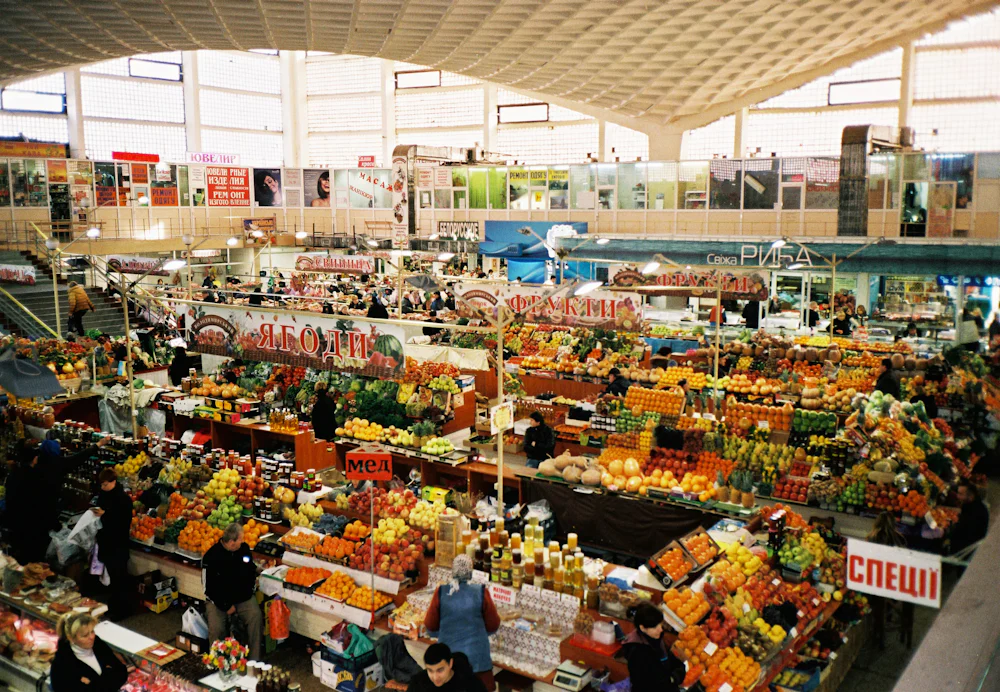
The BBC's International News correspondent, Barbara Plett Usher, recently provided a poignant dispatch from Doha's historic Souq Waqif, observing a gradual return to vibrancy two weeks into the ongoing conflict involving Iran. This report offers a crucial glimpse into the reconstitution of normalcy in a region frequently beset by geopolitical volatility. Initially, the market likely experienced a pronounced downturn in activity, mirroring widespread public apprehension and economic uncertainty that often accompany heightened regional tensions. However, Usher's visit underscores a compelling narrative of societal adaptation, where a new equilibrium, termed a 'new norm,' is progressively taking hold among the populace. The bustling nature of the market, though perhaps not yet at pre-conflict levels, signifies a collective endeavor to reclaim daily rhythms and economic stability despite the persistent backdrop of military strikes. This burgeoning activity is indicative of the inherent resilience of communities in navigating complex crises, illustrating how local economies begin to recalibrate and function even under duress. The report implicitly posits that while external pressures continue, the internal dynamism of a city like Doha allows for a remarkable, if cautious, resurgence of public life and commerce.
Advanced Grammar: Nominalization
Nominalization is the process of forming a noun from another part of speech, often a verb or adjective. It's common in formal and academic writing to condense information and shift focus. For example, instead of saying "The market *was vibrant again*", the text states "a gradual return to *vibrancy*." Similarly, "The strikes *continue*" can be nominalized to "the *continuation* of strikes" or "the persistent backdrop of military *strikes*." This grammatical technique adds density and formality to expressions.
Click on an option to check your answer.
1. What is the primary focus of Barbara Plett Usher's report from Doha?
2. What does the phrase 'a new norm' signify in the context of the passage?
3. The passage suggests that Souq Waqif initially experienced what impact due to the conflict?
4. In the context of the passage, 'strikes in the region' most likely refers to:
5. What characteristic of communities is highlighted by the market's 'burgeoning activity' despite conflict?
6. How does the passage describe Doha's market activity compared to pre-conflict levels?
7. Which grammatical concept is exemplified by phrases like 'reconstitution of normalcy' and 'geopolitical volatility'?
A recent BBC report has shed light on the devastating aftermath of an Israeli military strike in southern Lebanon, which tragically resulted in the loss of an entire family. The foreign correspondent visited the site, documenting the destruction and interviewing local residents deeply affected by the incident. According to a relative, who spoke passionately to the BBC, the individuals killed were unequivocally civilians, entirely disconnected from any militant activities, thereby asserting a severe breach of humanitarian law. Conversely, the Israel Defense Forces (IDF) maintains a different stance, stating unequivocally that its operation was aimed at targeting "terrorist infrastructure" belonging to Hezbollah, a designated militant group operating in the region. This significant discrepancy in narratives underscores the persistent challenges in verifying claims amidst ongoing geopolitical conflict. The incident further exacerbates already heightened tensions along the volatile border, raising serious concerns about potential escalation and the plight of non-combatants caught in the crossfire. Such reports are critical for understanding the complex dynamics and human cost of prolonged regional instability.
Advanced Grammar: Reporting Verbs and Indicative Mood
In formal writing, especially when presenting conflicting information, the choice of reporting verb significantly impacts nuance. Verbs like 'tells', 'says', and 'states' often introduce indicative clauses, presenting information as factual or as the speaker's direct assertion (e.g., "A relative *tells* BBC those killed *were* civilians."). Our text uses 'tells', 'maintains', and 'stating' to present the different claims, highlighting the directness of their respective assertions without explicitly endorsing either. For instance, "The Israel Defense Forces (IDF) *maintains* a different stance, *stating* unequivocally that its operation was aimed at targeting 'terrorist infrastructure'." Here, 'maintains' and 'stating' are used to present the IDF's firm position.
Click on an option to check your answer.
1. What is the central conflict highlighted in the news brief?
2. What did the relative interviewed by the BBC assert about the deceased family?
3. What reason did the Israel Defense Forces (IDF) provide for the strike?
4. What does the term "unequivocally" imply about the relative's statement?
5. The word "discrepancy" in the passage most closely means:
6. What is the primary challenge for news organizations like the BBC when reporting on incidents like this?
7. In the sentence, "The Israel Defense Forces (IDF) *maintains* a different stance, *stating* unequivocally that its operation was aimed at targeting 'terrorist infrastructure'," what is the grammatical function of the words 'maintains' and 'stating'?